IRONMAN 70.3 Augusta transforms downtown Augusta and the Savannah River corridor into one of the most electric single-day events on the Southeast endurance calendar. More than 2,000 athletes and thousands of friends, families, and supporters descend on the city on race morning — and the streets that make this course famous are the exact same streets that become nearly impossible to navigate by car. Reynolds Street runs closed eastbound.
Fifth Street Marina parking is locked out from Friday noon through Sunday evening. Gordon Highway south of downtown fills with police-controlled bike-course traffic. If your group is trying to manage all of that from behind a wheel, you are missing the whole point of the day.
This guide walks through every piece of the transportation picture for race weekend: where the swim starts and finishes, which roads close and when, the best spectator vantage points on the run course and finish line at Augusta Common, and exactly why a charter bus or minibus rental is the single most effective way to keep athletes and their crew moving together across two states and three disciplines. At Party Bus Augusta, we handle groups at this race every September — so the logistics below come from doing it, not from a brochure.
Race date
Sunday, September 27, 2026
Swim start
Sharon Jones Amphitheater, North Augusta — 7:00 AM
Swim finish
5th Street Marina, downtown Augusta — 1.2 miles down the Savannah River
Finish line
Augusta Common, downtown Augusta
Road closures active
4:00 AM – 6:00 PM Sunday
Athletes + spectators
~6,500 attendees total; 2,000+ registered racers
What Is IRONMAN 70.3 Augusta?
IRONMAN 70.3 Augusta is one of North America's largest half-distance triathlons, held annually on the last Sunday in September in Augusta, Georgia. The “70.3” refers to the total race distance in miles: a 1.2-mile open-water swim, a 56-mile bike leg, and a 13.1-mile run. In Augusta's case, every one of those miles is genuinely spectacular.
The swim is a downriver pull through the Savannah River with enough current to produce some of the fastest half-IRONMAN swim splits in the country. The bike winds through South Augusta on a mix of smooth rural roads and highway corridors before returning downtown. The run traces the Augusta Riverwalk and the North Augusta Greeneway before finishing at Augusta Common, with two cities — Augusta, Georgia and North Augusta, South Carolina — lined up on both banks to cheer competitors across the 13th Street Bridge.
The race has called Augusta home since 2009 and has generated more than $76 million in economic impact for the region. Organizers confirmed in 2025 that the event is contracted through at least 2030. That commitment matters for your planning: this is not a one-time event that reshuffles every year.
The course, the road closure zones, and the spectator viewing corridors are consistent enough that the approach you read here will still apply in 2026 and beyond.
The Course: What It Means for Spectators
Understanding the three-discipline layout is what separates a spectator group that sees their athlete once from one that sees them four or five times. The good news about IRONMAN 70.3 Augusta is that the run course is extraordinarily spectator-friendly. The bad news is that getting around downtown between 4 AM and 6 PM Sunday requires real planning.
The Swim: Sharon Jones Amphitheater to the 5th Street Marina
Athletes enter the Savannah River at the Sharon Jones Amphitheater in North Augusta, South Carolina, and swim 1.2 miles downstream with the current to the 5th Street Marina in downtown Augusta. The race goes off around 7:00 AM. The 5th Street Pedestrian Bridge — the newly renovated span connecting Augusta and North Augusta with its illuminated deck and shaded seating — is the single best natural viewing spot on the course: from the center of the bridge, you can watch the entire swim column as it moves beneath you and emerges at the marina.
For groups who want to see the swim and get positioned for the run, this is the morning’s anchor point.
SRP Park, home of the Augusta GreenJackets baseball team, sits on the North Augusta bank directly adjacent to the swim start area, and the city has historically opened its grounds on race morning as a spectator gathering zone with music and easy river sightlines. That’s worth factoring into your morning plan — particularly if your athlete is in a later swim wave and the group wants somewhere to land before the action begins.
The Bike: Downtown Through South Augusta and Back
After exiting the river and moving through the 5th Street Depot transition area in downtown Augusta, athletes mount their bikes and head out on a 56-mile single loop through South Augusta. The route takes cyclists onto Reynolds Street, then south via Fifth Street to Gordon Highway, continuing through Mike Padgett Highway, Old Waynesboro Road, McDade Road, and Brown Road before looping back to downtown via Doug Barnard Parkway. The first riders hit the south Augusta corridor around 7:19 AM.
The bike course is the hardest discipline to spectate efficiently. The loop runs through South Augusta neighborhoods that are logistically difficult to reach and exit during road closure windows. Most spectator groups who try to chase athletes on the bike end up stuck on Gordon Highway or Peach Orchard Road waiting for a crossing.
The smarter move is to hold your position at the swim finish/transition zone, then relocate to the run course well before the lead athletes finish the bike. A charter bus parked in a downtown parking garage — rather than chasing the bike course by car — is exactly what solves this transition.
The Run: Riverwalk, 13th Street Bridge, and Augusta Common
The 13.1-mile run is where IRONMAN 70.3 Augusta earns its reputation for atmosphere. Athletes leave the transition area and run out along the Augusta Riverwalk, cross the iconic 13th Street Bridge into North Augusta, then follow the shaded, flat North Augusta Greeneway trail before looping back across the bridge and into downtown Augusta for the finish at Augusta Common. The Riverwalk at St. Paul’s Church is one of the densest spectator corridors on the entire course — athletes pass it multiple times, and the riverside shade makes it far more comfortable in late September heat than most finish-line plazas.
The 13th Street Bridge crossing is a natural rallying point. Spectator groups who position on either bank of the bridge — the Augusta Riverwalk side or the North Augusta Greeneway trailhead — can watch athletes crossing in both directions, then walk five minutes to Augusta Common to catch the finish. That two-for-one viewing window is the most efficient use of a spectator group’s afternoon, and it requires no car movement once you are in position.
Road Closures and Parking: What You Need to Know
This is the section that decides whether your group has a great race day or a frustrating one. The road closures for IRONMAN 70.3 Augusta are extensive, and they go into effect long before most spectator groups think to arrive.
What Closes and When
Traffic restrictions across the downtown and South Augusta corridor go into effect at 4:00 AM Sunday and remain in place through 6:00 PM. Organizers estimate all bike-course roads are clear by approximately 3:00 PM, but the run-course corridors — Reynolds Street (closed eastbound from 13th Street to Fifth Street), the Riverwalk approaches, and Augusta Common — remain under event management through the afternoon.
Key closures that affect spectators specifically:
- Reynolds Street runs closed eastbound from 13th Street to Fifth Street for most of the race morning and afternoon. Westbound remains open. This directly affects access to the Convention Center parking garage and most downtown surface lots.
- Fifth Street, Sixth Street, Sibley Street, and Center Street are under no-parking and controlled-traffic restrictions from 4:00 AM through 6:00 PM Sunday.
- Gordon Highway, Mike Padgett Highway, Old Waynesboro Road, and McDade Road in South Augusta operate under rolling bike-course closures from approximately 7:19 AM through early afternoon. Crossing points are managed by law enforcement but can mean extended waits.
- Fifth Street Marina parking area is closed from Friday noon through Sunday 6:00 PM. If your group expects to park at the marina, you will be turned away days before race morning.
- Augusta Greeneway trail parking lots — including the lot off Riverside Boulevard and the trail lot at the rapids by Martintown Road — are restricted from 4:00 AM through 6:00 PM Sunday.
- North Augusta Municipal Center parking lot at 100 Georgia Ave. is also restricted from 4:00 AM through 6:00 PM Sunday.
The takeaway is clear: if your plan is to drive downtown, find parking near the Riverwalk, and move freely on race morning, that plan does not work. The spots and lots your GPS will direct you toward are either closed, restricted, or blocked by event infrastructure.
Where Groups Can Park
Downtown Augusta’s permanent parking structures — including the Reynolds Street Deck at 918 Reynolds St. and the Board of Education Garage at 846 Ellis St. — are not directly affected by race closures, but access routes to them shift as Reynolds Street eastbound is closed. Groups approaching from the west side of downtown have the clearest lines in. The Augusta Convention Center Garage at 549 Broad Street and the Augusta Museum of History Garage at 560 Broad Street provide additional structured options, with rates running roughly $1.50/hour and $1.00/hour respectively based on standard pricing.
On the North Augusta side, SRP Park’s Riverside Village Parking Deck and the adjacent surface lots provide approximately 1,100 spaces, with on-site paid parking at around $5 for events. Street parking in North Augusta runs $1 per hour via the Park Smarter app from 2:00 PM to midnight. These lots are useful for the swim start and early-morning viewing, but they are also subject to event-related restrictions on race morning — confirm current access at North Augusta’s official public parking page before race day.
The honest assessment: for groups of six or more, hunting for downtown parking on race morning is a losing strategy. One charter bus or minibus parked in a single structured garage — confirmed and in place before 4:00 AM closures lock in — solves every version of this problem.
Why a Charter Bus Solves Race Day
IRONMAN 70.3 Augusta presents a specific logistical challenge that most endurance-event spectators don’t fully anticipate: your athlete moves across three segments of a course spread across two states and more than 70 miles, while your spectator group is trying to track them in real time with a car that cannot access half the streets in the race zone. Add six people to that car and the problem compounds. Add a 13-hour race day with a 4:00 AM setup and a 6:00 PM teardown, and you have the conditions that turn a spectacular event into an exhausting one.
An Augusta charter bus rental changes the math entirely. Your group loads once in the morning from your hotel or gathering point, arrives at the course before road closures create problems, and then uses the bus as a home base — not a navigation problem. The bus parks in a confirmed downtown structure.
Your group walks to the 5th Street Bridge for the swim, relocates on foot along the Riverwalk for the run, and reaches Augusta Common for the finish without ever needing to move the vehicle. After the race, everyone loads back onto the bus together for the ride home or to dinner — no surge-pricing rideshare scramble, no group members stranded at different parking structures trying to regroup.
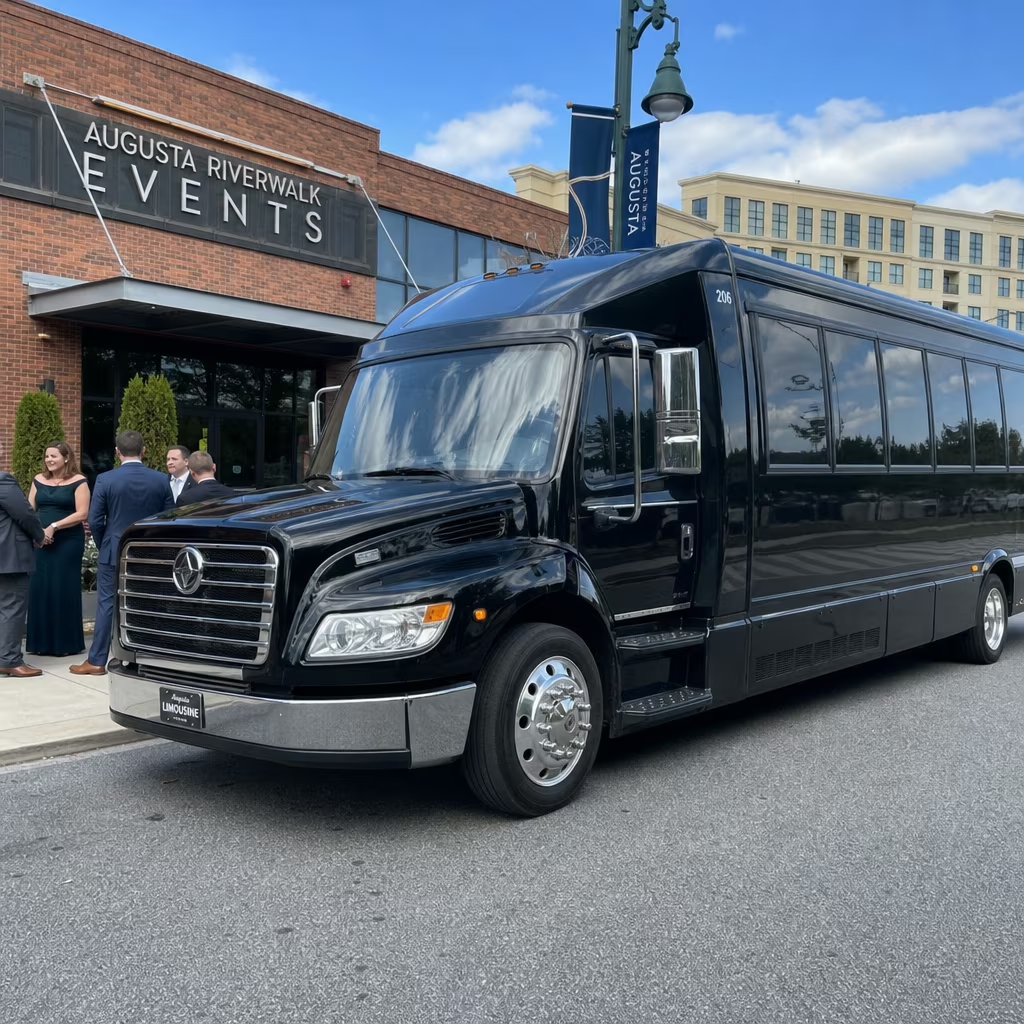
For larger contingents — families flying in for a racer’s first IRONMAN, corporate teams supporting an employee athlete, triathlon clubs with several registered participants and their supporters — a 40- to 56-passenger charter bus is often the only vehicle that keeps the whole group together across the entire day. A minibus handles smaller crews with the same single-stop efficiency.
Which Vehicle Fits Your Group?
Not every race-day group looks the same. Here is how the options from our fleet break down for IRONMAN 70.3 Augusta.
| Vehicle | Typical capacity | Best for | Key amenities |
|---|---|---|---|
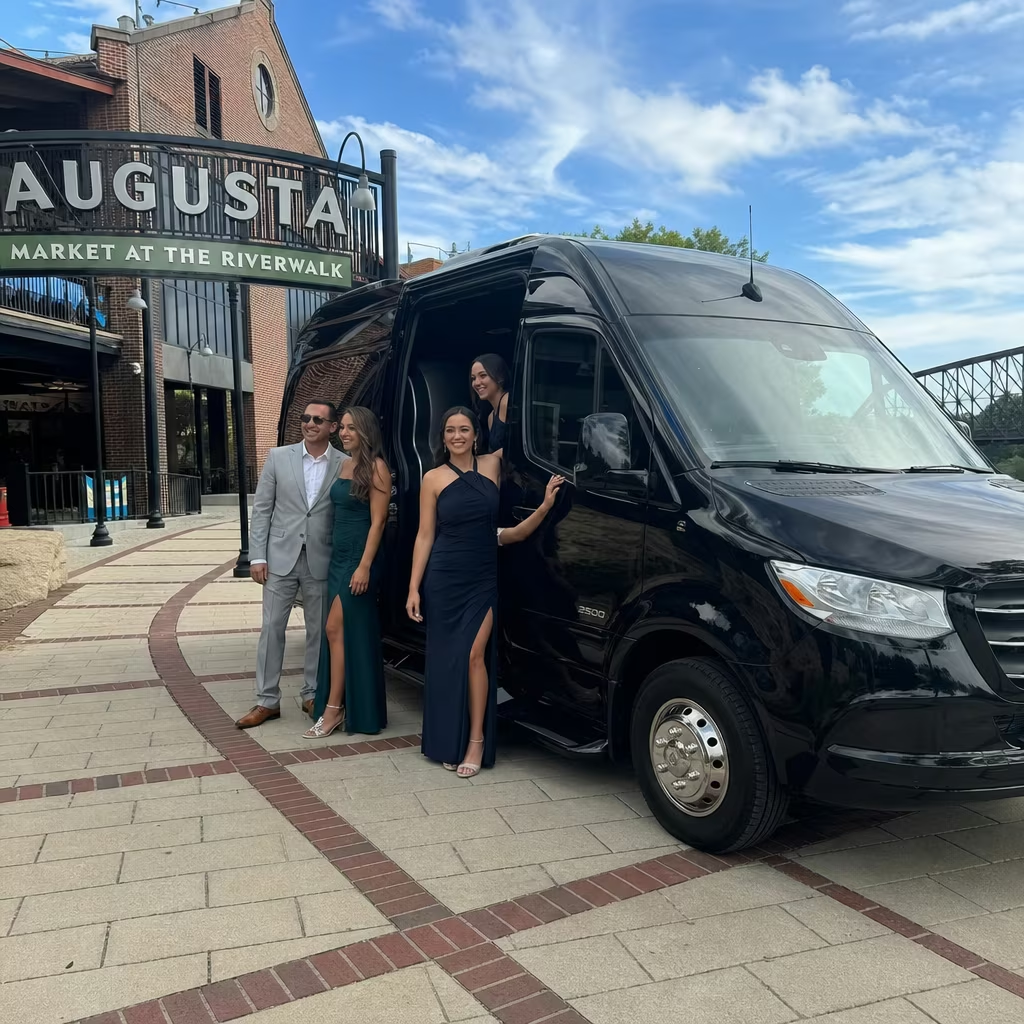
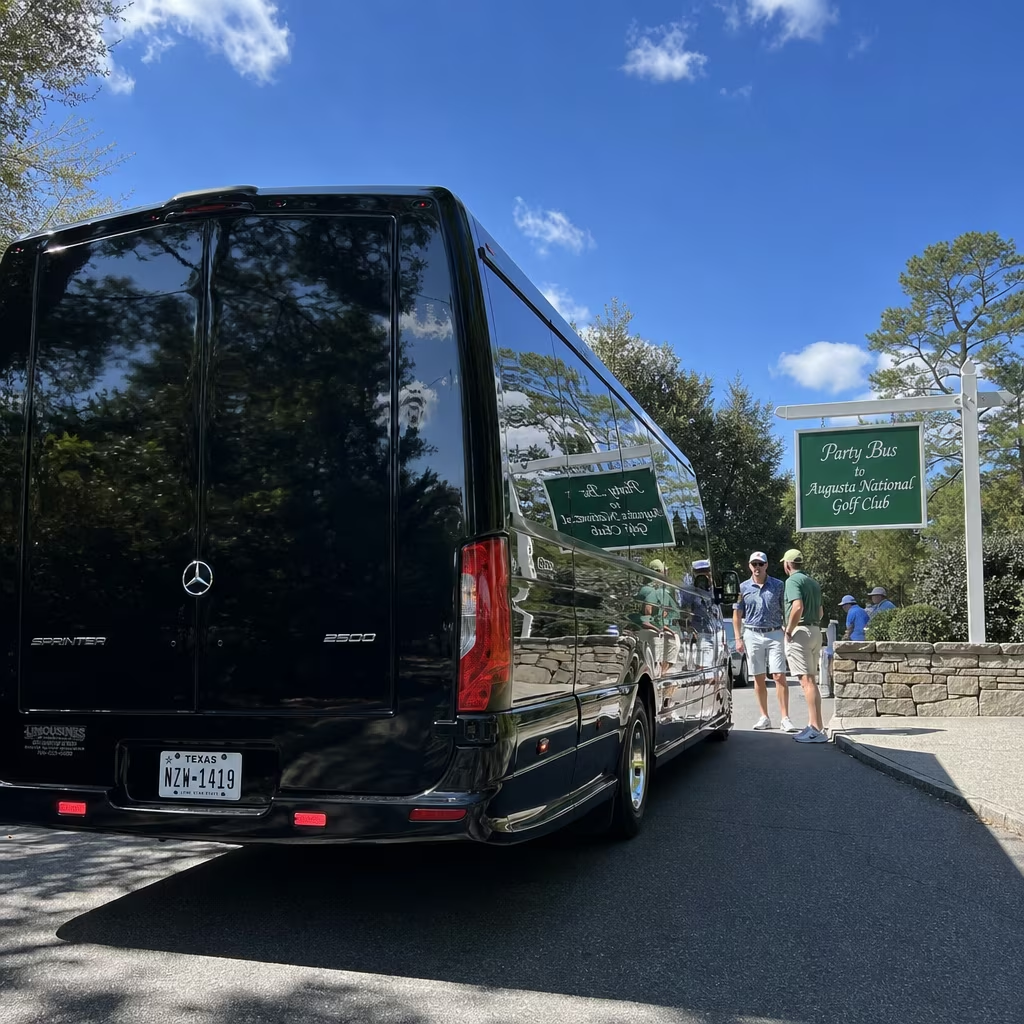
| Sprinter van | Up to ~14 | Small family group, 2–3 athletes and their crews | Climate control, USB charging, comfortable seating |
| 15–35 passenger minibus | ~15–35 | Mid-size support groups, triathlon clubs, team athlete crews | Powerful A/C, plush reclining seats, overhead storage |
| 40–56 passenger charter bus | Up to 56 | Large family contingents, corporate groups, organized supporter clubs | Reclining seats, climate control, overhead storage, WiFi, power outlets, onboard restroom, undercarriage luggage bays |
The onboard restroom on a full-size charter bus is worth particular note for a race this long. If your group is on-course from 6:00 AM through the finish line — which can run well into early afternoon for age-group athletes — having a restroom on the bus cuts out the scramble for portable facilities near Augusta Common or the Riverwalk. On a 13-hour race day in late-September Georgia heat, climate-controlled seating between viewing windows is not a luxury; it is what keeps your group functional and enthusiastic through the finish.
ADA-accessible vehicles are available — just let us know before your booking date so we can arrange the right vehicle for your group’s needs.
Transportation for Athletes: Gear, Bikes, and the Logistics Window
Athletes registered for IRONMAN 70.3 Augusta face a different set of logistical challenges than spectators — and a charter bus or minibus takes care of several of them directly.
Bike check-in typically occurs on Saturday before race day at the transition area in downtown Augusta. Athletes driving alone must navigate downtown Augusta on Saturday, find parking near the transition zone, haul their bike and gear bags, and then repeat the reverse process on Sunday after the race. For athletes arriving from outside the Augusta metro — Columbia, Athens, Charlotte, Atlanta, Savannah — that Saturday trip is an additional travel day.
A charter bus rental solves the Saturday logistics and the Sunday return in one booking. Organized triathlon clubs and multi-athlete groups can load bikes into undercarriage bays Saturday morning, handle check-in together, and be back at their hotel without any individual athlete managing car parking near a closed zone. On Sunday, the bus picks up athletes at their hotel before the road-closure window, gets them to transition staging, and then repositions as a crew vehicle for the support group during race hours.
After the finish — when athletes are depleted, sunburned, and carrying wet gear bags — a climate-controlled bus waiting at Augusta Common is a considerably better recovery option than a parking-garage hike.
One timing note for athletes: Fifth Street Marina parking closes Friday noon and does not reopen until Sunday 6:00 PM. Any athlete planning to use that lot for bike drop-off will find it gated. Transition-area access on Saturday runs on IRONMAN-controlled staging, not public parking — confirm the current athlete guide at ironman.com/im703-augusta-course before finalizing your Saturday plan.
Spectator Strategy: How to See Your Athlete the Most
IRONMAN 70.3 Augusta is one of the most watchable courses in the IRONMAN 70.3 North American circuit, precisely because the run course doubles back on itself across the 13th Street Bridge. With a solid plan, a spectator group can reasonably see their athlete four times: at the swim finish, through T1 transition, on the run course, and at the finish line. Here is the sequence that gets you the most sightings without needing to move a car.
Stop 1: 5th Street Bridge and Marina (7:00–9:00 AM)
Position on the 5th Street Pedestrian Bridge before 7:00 AM. The bridge sits directly over the swim exit corridor and gives a clear sightline to the last 200 meters of the swim and the marina exit ramp. Athletes typically emerge from the water between 7:30 AM and 9:30 AM depending on wave assignment.
After spotting your athlete exiting the water, the transition area at the 5th Street Depot is a short walk east. T1 is not always accessible to spectators, but the approaches on Reynolds Street and around the Depot provide reasonable sightlines for athletes heading out on the bike.
Stop 2: Augusta Riverwalk at St. Paul's (11:30 AM onward)
Once the bike course closes and the run begins, the Riverwalk corridor between the Depot and the 13th Street Bridge fills with supporters. This is the most festive section of the course — athletes pass this section of the Riverwalk on the outbound and return legs of the run, meaning your group has two sighting windows from the same spot. St. Paul’s Church, at 605 Reynolds St., anchors the northern edge of the best Riverwalk viewing corridor.
Find a shaded spot, settle in, and your athlete will pass twice.
Stop 3: 13th Street Bridge (midday)
The bridge crossing is a naturally emotional moment in the race — athletes see the North Augusta skyline, hear the crowd on both banks, and can feel the community on both sides of the Savannah River. Walking from the Riverwalk to the 13th Street Bridge approach takes under ten minutes. Spectators who position at the Augusta end of the bridge can watch athletes heading outbound to North Augusta and returning toward the finish in the same window.
Stop 4: Augusta Common Finish Line (early afternoon through evening)
Augusta Common in the heart of downtown is the IRONMAN finish line, and it is genuinely spectacular in the late afternoon when age-group finishers are coming through. The finish-line chute is open to all spectators. Most athletes in the field finish between roughly 11:00 AM and 6:00 PM based on the full half-IRONMAN time range, so your athlete’s estimated finish window is worth knowing before you leave the Riverwalk.
The bus, waiting nearby, is ready when the celebration ends.
How Much Does an Augusta Bus Rental Cost for IRONMAN Weekend?
Charter bus pricing for IRONMAN weekend is shaped by the same factors that determine any group rental: vehicle size, total hours, pickup and drop-off location, and the date. Party Bus Augusta provides all-inclusive pricing in under 30 seconds — you will know the exact cost before you ever book.
For real ranges to anchor your estimate: a 14-passenger Sprinter limo runs $170–$344/hour; 15–35 passenger minibuses run roughly $150–$300/hour; and 40–56 passenger charter buses run $150–$300/hour or $1,200–$2,500 for a full-day booking. IRONMAN weekend is a full-day commitment — from pre-dawn athlete staging through the late-afternoon finish — so most groups book on a day-rate or a 10-to-12-hour block rather than an hourly arrangement.
Here is the per-person math that usually settles the debate. A 40-passenger bus at $1,800 for the day splits to $45 per person across a full contingent — versus the stress, the failed parking plan, and the 6:00 PM Uber surge that comes with driving separate cars into a street-closure zone. Call 404-909-8501 to get your exact quote for race weekend.
Book early. IRONMAN 70.3 Augusta consistently draws 2,000-plus athletes plus thousands of spectators from across North America. Hotels in the Augusta metro sell out months in advance, and charter vehicles follow the same pattern.
For September 27, 2026 — the confirmed 2026 race date — vehicle availability in the Augusta fleet tightens by June. The earlier you call, the better your options on vehicle size and pickup timing.
A Real Race Day Example
To put a timeline behind the plan: a 24-person supporter group booked a 35-passenger minibus for a recent IRONMAN 70.3 Augusta weekend. Pickup at 5:45 AM from a hotel on Washington Road. The bus parked in the Reynolds Street Deck by 6:15 AM — before the eastbound road-closure window tightened.
The group walked to the 5th Street Bridge for the swim, watched their athlete exit the water at 8:10 AM, then moved to the Riverwalk corridor at St. Paul’s for the run. Their athlete crossed the 13th Street Bridge outbound at 12:40 PM; the group repositioned to Augusta Common and was in position at the finish chute by 1:15 PM. Their athlete crossed the finish line at 1:44 PM.
The bus was back at the Reynolds Street Deck, engine running, by 2:10 PM — and the group was back at the hotel and headed to a celebratory dinner on Broad Street by 3:00 PM. Zero parking scramble, four athlete sightings, one vehicle. That is the race-day result a charter bus makes possible.
Transportation Options Compared
A quick honest look at every way a group gets to IRONMAN 70.3 Augusta, scored on the factors that matter on race day.
| Option | Cost shape | Handles road closures? | Group stays together? | Works for full race day? |
|---|---|---|---|---|
| Charter bus or minibus | One flat rate split by group | Yes — one parking move, no replanning | Yes — one vehicle all day | Yes — onboard restroom, climate control, full-day staging |
| Multiple personal cars | Gas per car + parking per car | No — closures require constant replanning | No — groups split at every transition | Difficult — car movement between segments is the core problem |
| Rideshare (Uber/Lyft) | Per ride each way + surge pricing | Partly — surge pricing at race-end is severe | No — multiple cars, no coordination | No — late-day surge pricing from Augusta Common is significant |
| Park far, walk in | Parking + extended walk each way | Partially — fewer closures at distance lots | Only if everyone meets at one lot | Difficult — 13-hour day on foot in September heat |
For groups of eight or more, the personal-car and rideshare columns produce the same outcome: someone in your group misses a viewing window, gets separated, or is still waiting for a rideshare while the rest of the group is watching the finish. One bus cuts out every version of that scenario. Call 404-909-8501 and we will build the right plan for your group’s size and itinerary.
Out-of-Town Groups: Flying In and Getting to the Course
A significant portion of IRONMAN 70.3 Augusta athletes and their support crews fly in from outside the Southeast. The closest commercial airport is Augusta Regional Airport (AGS) at 1501 Aviation Way, Augusta, GA 30906, roughly six miles south of downtown along Bobby Jones Expressway. AGS handles direct service from Charlotte, Atlanta, and Washington Dulles.
The Charlotte Douglas International connection is the most common routing for athletes from the Northeast and Midwest.
Atlanta Hartsfield-Jackson (ATL) is approximately 150 miles west of downtown Augusta via I-20 East — a two-to-two-and-a-half-hour drive in normal conditions. For large groups flying into ATL and heading to Augusta for race weekend, a charter bus from the airport to the hotel and then through race-day operations covers the entire trip in one booking. That means no rental-car logistics, no coordinating multiple airport arrivals into a caravan, and no hunting for Augusta parking with an unfamiliar vehicle on race morning.
For groups with athletes transporting bikes on the flight, the undercarriage bays of a full-size charter bus handle cases and gear bags alongside personal luggage — no compromises on what comes to race weekend. Let us know your travel itinerary and we will sequence the pickup and drop-off to cover AGS, hotel, athlete check-in on Saturday, and race-day positioning on Sunday in a single, coordinated plan.
Race Weekend Planning Timeline
IRONMAN 70.3 Augusta is a two-day commitment for most out-of-town groups. Here is the practical sequence.
Saturday (race eve): Athletes complete mandatory bike check-in at the downtown Augusta transition area. Road closures are not yet active, but parking near the Depot and 5th Street Marina area is managed. Groups who want to walk the run course or scout spectator positions on the Riverwalk or 13th Street Bridge can do so on Saturday without restriction.
This is also the day to confirm your bus staging location with our team for Sunday morning.
Sunday (race day), pre-4 AM: Athletes staging for transition should be in position or en route before the full road-closure window tightens. If your athlete needs to reach T1 on race morning, the bus should be parked at the parking structure before 4:00 AM. The race officially goes off at 7:00 AM for swim start.
Sunday morning through afternoon: Swim viewing on the 5th Street Bridge (7:00–9:30 AM), transition observation near the Depot (8:00–9:30 AM), bike-course wait period (groups hold downtown or at SRP Park), run-course viewing on the Riverwalk and 13th Street Bridge (11:00 AM onward), finish-line coverage at Augusta Common (from approximately 11:00 AM through late afternoon for the full age-group field).
Post-race: Road closures begin lifting by 3:00 PM on the South Augusta bike-course roads; downtown run-course areas clear by 6:00 PM. The bus returns your group to the hotel, airport, or dinner reservation without navigating the post-race pedestrian surge around Augusta Common on foot.
Frequently Asked Questions
Where exactly does IRONMAN 70.3 Augusta start?
The swim starts at the Sharon Jones Amphitheater in North Augusta, South Carolina, on the south bank of the Savannah River near SRP Park. Athletes enter the water and swim 1.2 miles downstream with the current to the 5th Street Marina in downtown Augusta, Georgia. Spectators on the 5th Street Pedestrian Bridge have a clear overhead view of the swim corridor.
Where is the IRONMAN 70.3 Augusta finish line?
The finish line is at Augusta Common in the heart of downtown Augusta, at the intersection of 8th Street and Broad Street. The finish-line chute is open to all spectators at no charge. Augusta Common is walkable from the Riverwalk viewing corridor and the 13th Street Bridge approach.
When do road closures start and end on race day?
Road closures and parking restrictions go into effect at 4:00 AM Sunday and remain in place through 6:00 PM. The South Augusta bike-course roads are expected to be clear by approximately 3:00 PM; downtown and Riverwalk areas clear closer to 6:00 PM. Reynolds Street is closed eastbound from 13th Street to Fifth Street for most of the day.
Where can a charter bus park during the race?
The Reynolds Street Deck at 918 Reynolds St. and the Board of Education Garage at 846 Ellis St. are downtown structured parking options that are not directly affected by race-related closures, though access routes shift as Reynolds Street eastbound closes. The Augusta Convention Center Garage at 549 Broad St. is another option. When you book with Party Bus Augusta, we confirm staging location and access route for your specific race-day timeline.
Is the IRONMAN 70.3 Augusta bike check-in on Saturday or Sunday?
Bike check-in is mandatory on Saturday, the day before the race, at the downtown Augusta transition area near the 5th Street Depot. The Fifth Street Marina parking lot is closed from Friday noon through Sunday evening, so athletes should not plan to use that lot for Saturday access. Always confirm the current athlete guide at ironman.com/im703-augusta-course for the official check-in schedule and transition zone access details.
How many athletes compete in IRONMAN 70.3 Augusta?
Approximately 2,000 to 2,500 registered athletes compete each year, with total race-weekend attendance including spectators and supporters estimated at around 6,500. The event has been held annually since 2009 and is contracted in Augusta through 2030.
How far in advance should I book a charter bus for IRONMAN weekend?
For the September 27, 2026 race date, we recommend booking by early summer at the latest — ideally by June 2026 for the best vehicle selection and full-day availability. IRONMAN weekend draws thousands of out-of-town visitors who fill the Augusta hotel and transportation market simultaneously. Vehicles that can handle a 12-to-14-hour race-day commitment book earlier than single-event evening rentals.
Call 404-909-8501 as soon as your race registration or spectator travel plans are confirmed.
Can a charter bus transport bikes for athletes?
Full-size charter buses have large undercarriage luggage bays that can fit bike cases and triathlon gear bags alongside personal luggage. For groups with multiple athletes, this cuts out the need for rental cars or personal vehicles dedicated to bike transport. Let us know at booking how many bikes your group is transporting so we can confirm the right vehicle configuration.
What about the Masters Tournament — does Augusta book up even earlier for IRONMAN?
The Masters Golf Tournament in April is Augusta’s other signature annual event and is even more transportation-constrained than IRONMAN week. The two events do not overlap, but both demonstrate the same pattern: Augusta’s transportation and hospitality inventory fills early for signature weekends. IRONMAN vehicle availability typically tightens in late summer as September approaches.
Earlier is always better for either event.
Book Your IRONMAN 70.3 Augusta Bus Today
Race day at IRONMAN 70.3 Augusta is one of the best spectator experiences in the Southeast endurance calendar — two cities, one river, and 70.3 miles of course that crosses the Savannah River, winds through South Augusta, and finishes in the heart of downtown at Augusta Common. Whether your group is a family of eight supporting a first-time finisher, a triathlon club with multiple registered athletes and a large support contingent, or a corporate team making a day of it, an Augusta bus rental keeps everyone together from pre-dawn staging through the finish-line celebration.
Call 404-909-8501 any time for an all-inclusive price quote — or use our online tool for instant availability. The 2026 race is September 27th. Lock your date before summer, and race day handles itself.